September 7, 2025
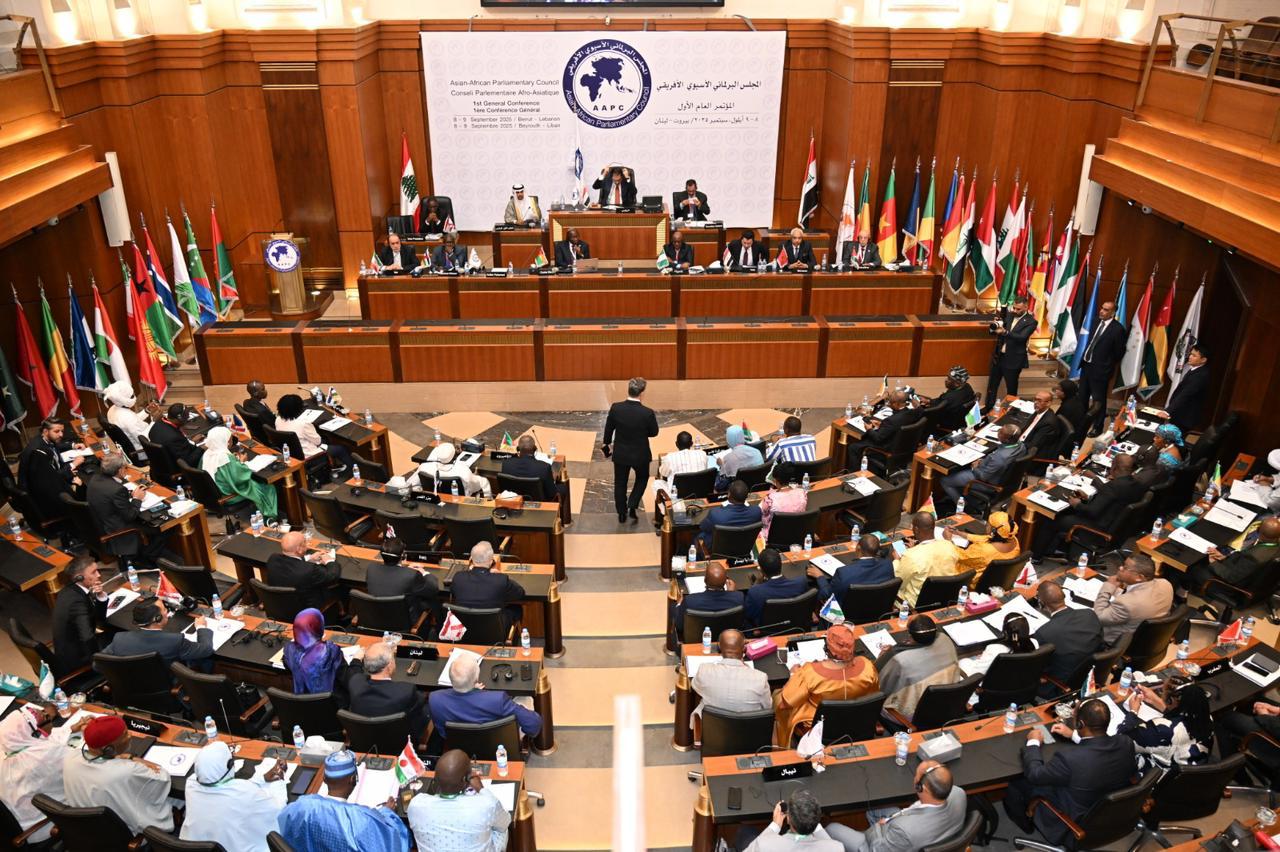
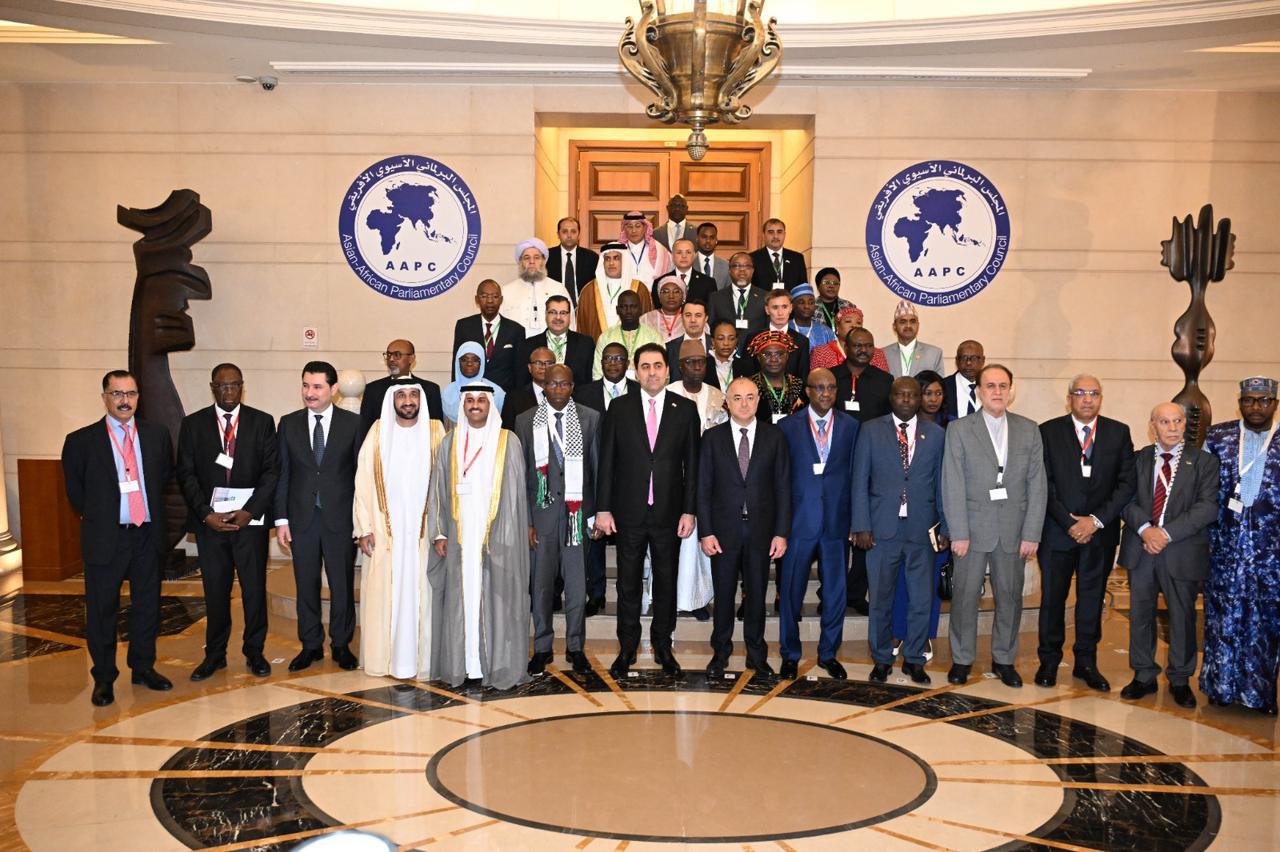
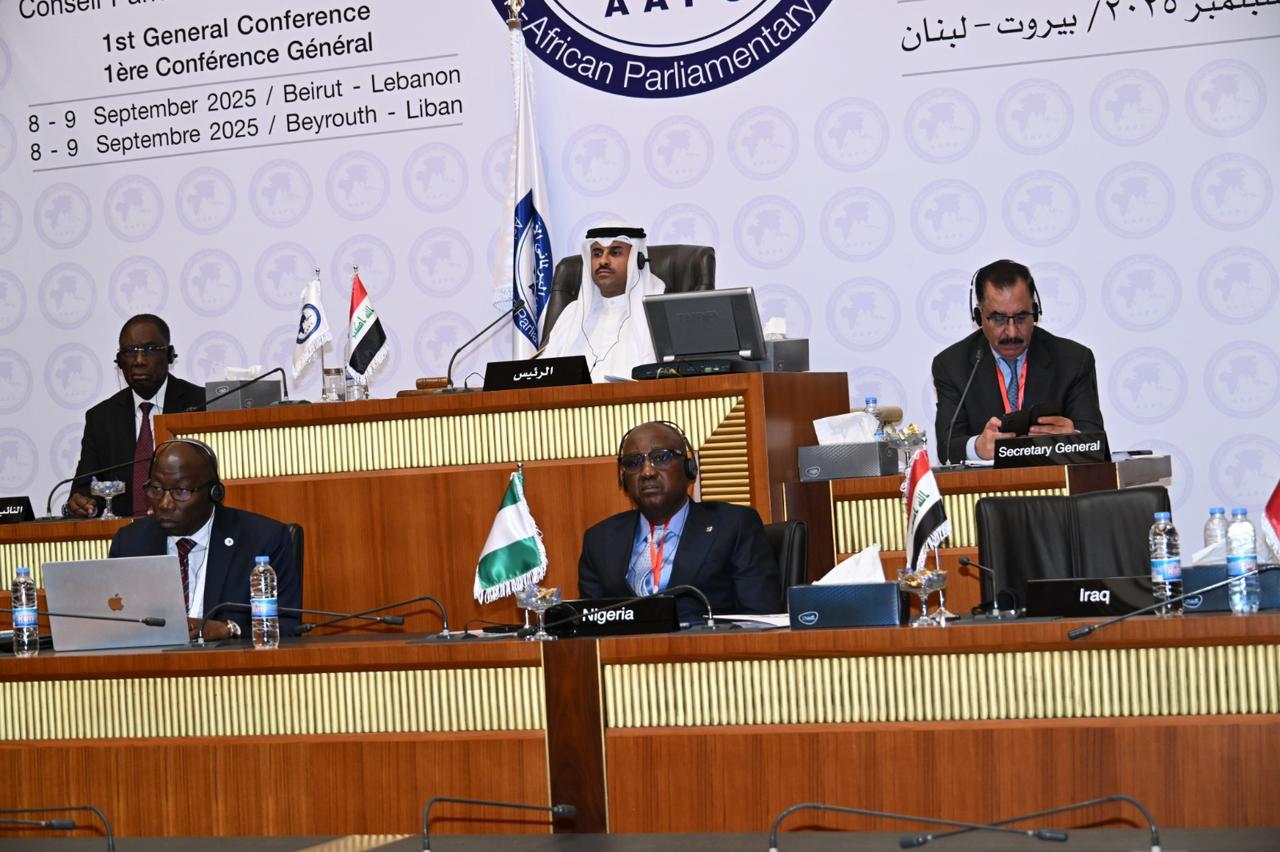
Beirut yesterday hosted the inaugural General Conference of the Asian-African Parliamentary Council at the Lebanese Parliament, under the patronage of the International Federation of Asian and African Trade Unions (IFAATU) and sponsored by Speaker of the Lebanese Parliament Nabih Berri, represented by Deputy Speaker Elias Bou Saab.
The conference was attended by:
• Mohsen Al-Mandalawi, President of the Asian-African Parliamentary Council,
• Saud Rashid Al-Hajailan, First Deputy President of the Council and President of IFAATU,
• The Speaker of the Nigerian House of Representatives,
• A large number of parliamentary presidents and representatives from Asian and African countries,
• Delegations from 37 nations.
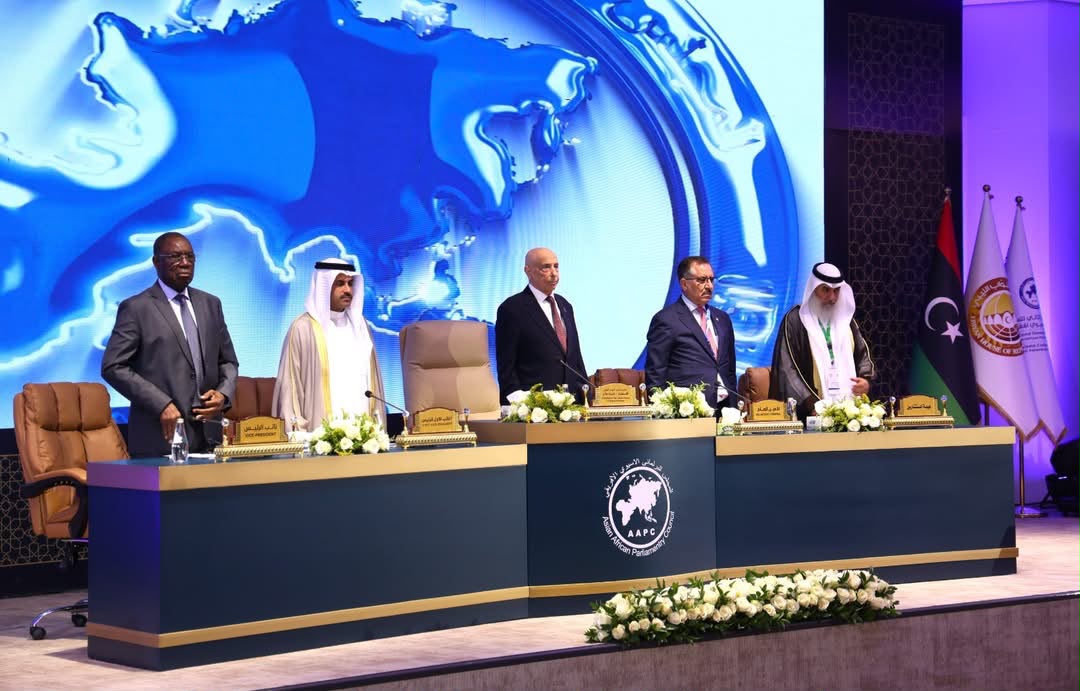
The conference was chaired by Al-Mandalawi, and the opening remarks were introduced by Fayez Al-Shawabkeh, Secretary-General of the Council.
⸻
Bou Saab Delivers President Berri’s Address
In his speech on behalf of Speaker Nabih Berri, Bou Saab welcomed the parliamentary heads, deputies, and participating delegations, stating:
“The world today is witnessing the emergence of a new political model, significantly different from the foundations upon which many nations were built over the past two centuries.
This hybrid political model is increasingly dominated by individual economic agendas over collective political will. Political activity is no longer exclusive to politicians — businesspeople now engage in politics as a part of their commercial and profit-driven ventures. Even military manufacturing has become more of a business enterprise than a matter of defense and strength.”
He continued:
“We now understand that part of this new political model involves manipulating intentions and distorting facts.
This underscores the critical importance of your meetings, as lobbying groups around the world have worked to promote suspicious agendas under the guise of honor, humanitarianism, and confronting threats — all while we know the compass of truth points elsewhere.
I call on you to form a unified front to resist these malicious lobbying efforts. Though the issues we face may seem different, be assured — it is the same sinister hand that threatens our collective future.”
Bou Saab added:
“A wise person must anticipate the future with flexibility and reassess their interests in light of noble values — not at the expense of core principles.
It is no longer sufficient to merely study the past; we must also plan for the future with vision and determination.”
⸻
Founding of the Asian-African Parliamentary Council
Al-Mandalawi, First Deputy Speaker of the Iraqi Parliament, chaired the official session and announced the establishment of the Asian-African Parliamentary Council.
In his opening speech, he said:
“Today, we lay the foundation of a joint parliamentary council and an active platform that speaks for the people, defends their causes, bridges the gap between political decision-making and public aspirations, and serves as a base for collective renaissance built on democracy and capped with human dignity.
This initiative aims to restore the rightful place of our two continents in shaping global decisions.”
He added:
“The world’s crises — from geopolitical conflicts and climate change to economic inequality, food insecurity, resource shortages, mounting debt, and the domination of international decisions under the so-called global order — all demonstrate the urgent need for parliaments to act as bridges between peoples, watchdogs over political performance, and allies of civil society.
If empowered and united, the people of our continents can emerge as a vibrant force for action and change.”
Al-Mandalawi also called for the organization of regular youth and women’s parliamentary conferences to promote political empowerment and solidarity with just causes — foremost among them, the Palestinian cause and the right of its people to establish an independent state with Jerusalem as its capital.
He stressed that parliaments must rise to this historic moment, forging a new partnership between Asia and Africa based not on sentiment but on mutual interests and cooperation in confronting shared challenges — not competing over scraps.
⸻
Saud Al-Hujailan’s Address
Saud Rashid Al-Hujailan, First Deputy President of the Council and President of IFAATU, delivered a keynote speech, stating:
“At the outset, I wish to express my deep gratitude and appreciation to His Excellency President Nabih Berri, and to all those involved in organizing and hosting the meetings of the Asian-African Parliamentary Council.
We were warmly received and experienced excellent organization at the distinguished Lebanese Parliament.”
He added:
“It is an honor to gather under the umbrella of this exceptional parliamentary initiative, led by a wise leader with a clear vision and unwavering principles — His Excellency President Nabih Berri, to whom we extend our deepest respect and admiration.”
Al-Hujailan emphasized:
“Since the founding of the International Federation of Asian and African Trade Unions, we have strived to create a tangible and qualitative impact in the labor sector, improving the rights of workers and upgrading the performance of trade unions.
We believe that union work is not only about safeguarding rights, but also a pillar of development and productivity, through which justice is achieved and duties are fulfilled without bias or neglect.”
He continued:
“Today, our Federation represents millions of workers and labor forces across Asia and Africa, in a rare display of unity that has contributed to enhanced productivity and quality.
This achievement marks the beginning of an even greater ambition, God willing.”
Al-Hujailan noted:
“Managing and advancing societies is a living, evolving task that demands constant review and continuous improvement.
Thus emerged the idea of establishing a joint parliamentary council between Asia and Africa to serve as an effective bridge between parliaments and trade unions — a real platform for voicing concerns and conveying the voices of workers and communities directly.”
He added:
“As grassroots trade union organizations, we possess effective tools for measuring the real-world impact of legislation and policies.
We offer vital feedback that can support parliaments in shaping decisions and formulating responsive policies.
This integration between parliamentary and trade union work presents a historic opportunity to build a cohesive system that addresses the hopes of our people across the two continents.”
In conclusion, Al-Hajailan said:
“I know our agenda is full of crucial files and discussions, so I’ll conclude by reaffirming our hope that this new parliamentary council will achieve its intended goals, improve lives, promote stability, development, and social justice, and strengthen cooperation.
We place at the disposal of this esteemed Council our accumulated experience and knowledge, driven by our firm belief that joint action is the shortest path to a better future.
.jpeg)